
Bernard Shaw once said, “Only in books has mankind known perfect truth, love and beauty.” This statement is a testimony to the universally acknowledged truth that manifests the importance of books in our lives.
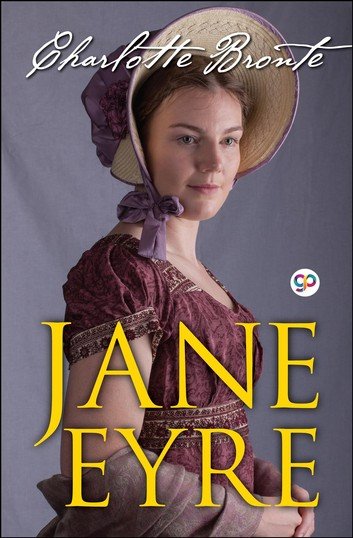
We all have read books of different genres, plots and themes and there always is one book which attracts our special attention and steals our appreciation and likeness. And, the book which took my praise, love and favoritism is ‘Jane Eyre’ by Charlotte Bronte whose details, facts, nitty-gritties shall be disclosed by me in the coming paragraphs.
Jane Eyre is a fictitious autobiographical novel which revolves around the story of an orphan girl, Jane Eyre, who, solitarily, fights some extra-ordinary problems and situations throughout turbulent times by placing a rigid and unshakable faith in Lord Jesus.
Though the novel has a significant facet of morality and religion, it estranges itself from the ideology of rigid conventionality being treated as ethical morality. Religion, in this book, is portrayed as a way to attain the perfect bliss of self and conscience. The novel has five distinct stages- Jane’s childhood where she is mercilessly tortured by her cousins and aunt; her time in the Lowood school where she makes some worthy acquaintances and also suffers oppressions and suppressions; a significant time period wherein she is installed as a governess in the Thornfield hall and falls in love with her employer Edward Rochester; her time with the Rivers’ family; and finally her reunion with her dear Rochester.
A literally-praiseworthy more-than-half portion of the novel covers Jane’s extraordinary relationship with a middle-aged man, who’s also her employer, Mister Edward Fairfax Rochester whom she plans to marry. But on the day of the scheduled marriage, Jane inadvertently comes to know about Mr. Rochester’s first wife, Bertha Mason, who’s a maniac and lives in a closed and secret room in the Thornfield Hall. Jane almost swoons hearing this and abandons Mr. Rochester and Thornfield forever though she has no anger or resentment for Mr. Rochester in her heart.
Providence brings her to a lonely and dusty shire in the country where she is given shelter by St. John Rivers and his two sisters. Jane there conceals her identity and gives herself a false name. As time passes by, St. John comes a bit closer to Jane and proposes to her to marry him and travel with him to India. The reason that he cites for this proposal is that he sees every quality that a missionary’s wife should have, in Jane and so she must marry him and serve humanity along with him. Jane declines this proposal very strongly but St. John is determined in his attentions and nearly convinces Jane one evening till she mystically hears Mr. Rochester’s voice and goes back to Thornfield. On reaching her former habitat, she finds it distraught and in complete ruins.
Somehow, Jane is able to locate Mr. Rochester’s new residence and when she visits him there; her eyes meet an unfortunate and shocking sight.
While Jane was away, a mishap happened at Thornfield, wherein Mrs. Rochester-the maniac, put the house to fire and committed suicide but the good Mr. Rochester lost his one hand and the sight of both of his eyes while saving the lives of the inhabitants of the ill-fated house.
Jane and Mr. Rochester both are overwhelmed at each other’s sight and are instantly moved to tears. They immediately resolve to marry within two days; and subsequently, in accordance with their plans, are married peacefully in a nearby church under the supervision of a priest. After two years of their marriage, Mr. Rochester recovers the sight of one eye and is able to see his newborn son. On this occasion he famously comments, “God has tempered his judgement with mercy.”
‘Jane Eyre’ accounts to be Charlotte Bronte’s most successful novel which gained her worldwide popularity and love.
It was originally published in two editions, (of which the second edition was dedicated to Mr. William Makepeace Thackeray), under the name of ‘Curer Bell’. Charlotte Bronte was forced to adopt this name for the society at that time, that is the 1850s, favored male authors and women were discouraged to write as Charlotte Bronte was by the then poet laureate Robert Southey. But William Thackeray, (whose daughter was also one of the writers’ community and wrote a biography of the author of Jane Eyre), supported Charlotte Bronte to a significant extent.
Pingback: “An Interview with the Computer: A Dystopian Answer” by Richard Thomas Blum Jr. - A creative store